1. Set a total first
Decide the most you want to spend before you look at venues or themes. Hold back about a tenth of it for surprises.
2. Draft the guest list
Guest count drives food, favors, seating and often venue price. Count adults and kids separately, since they eat differently and some venues charge per child.
3. List every cost category
- Venue or rental fee (or nothing, if at home)
- Food and drinks
- Cake or dessert
- Decorations and balloons
- Plates, cups, napkins, utensils
- Entertainment or activities
- Invitations
- Party favors
- Gift for the birthday person
- Extras: ice, tablecloths, trash bags, batteries, candles, lighter
4. Estimate, then track actuals
Next to each line put an estimated cost, the actual cost when you pay, and whether it’s paid. The gap between estimated and actual is where you see trouble early.
5. Countdown timeline
- 4–6 weeks out: set date and budget, book venue or entertainment, draft guest list.
- 3 weeks: send invitations, pick theme, order cake if needed.
- 1–2 weeks: follow up on RSVPs, ask about allergies, buy decorations and favors.
- 2–3 days: final headcount, buy food, charge devices.
- Day of: set up, pick up cake, ice.
- After: log final costs, send thank-you notes.
Track it in one spreadsheet
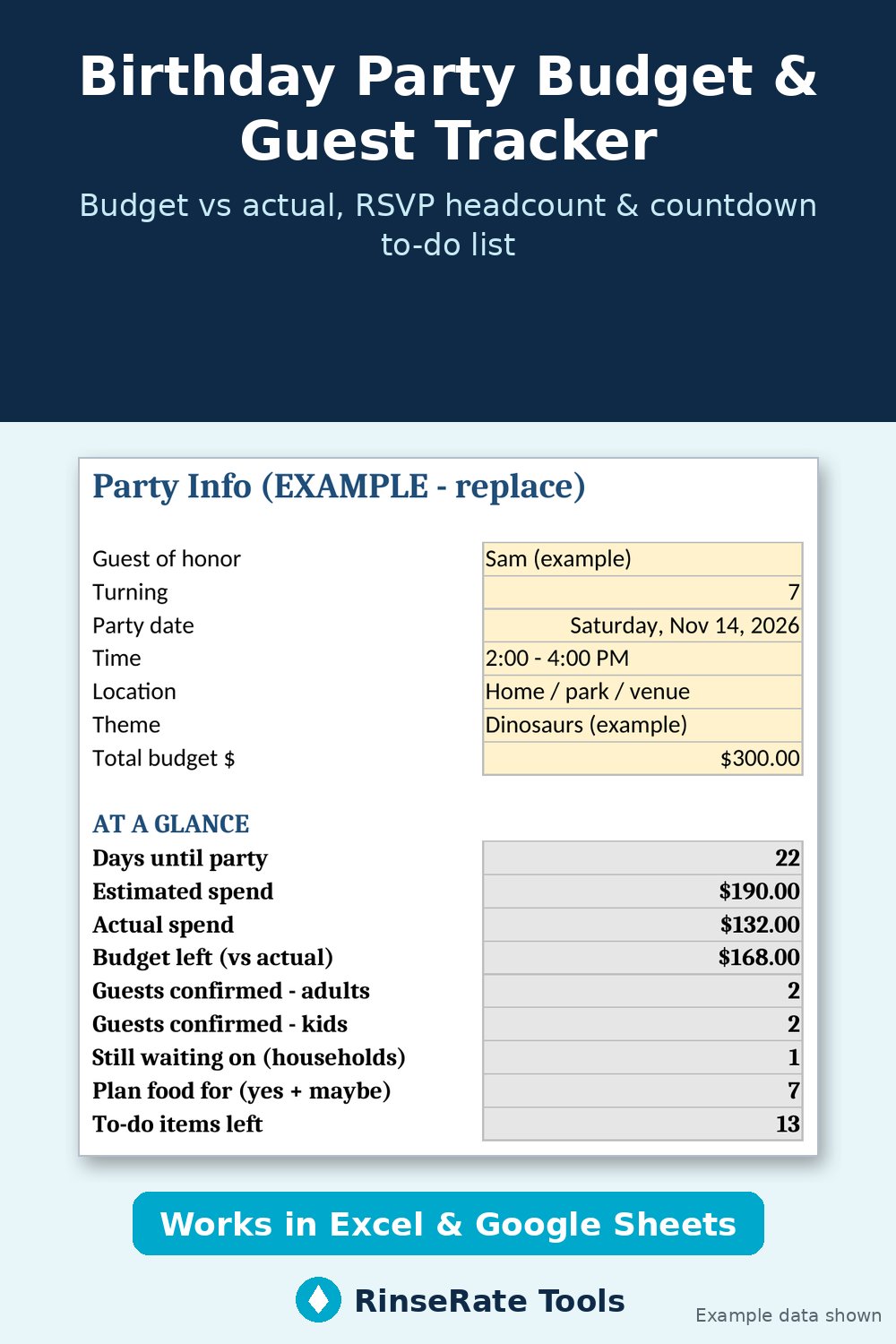
Template: Birthday Party Budget & Guest Tracker
A dashboard with days to go, estimated vs actual spend and budget left, a budget tab with a Paid column, an 80-row guest list with RSVPs, allergies and thank-you notes, and a countdown to-do list dated from the party.
Excel + Google Sheets. Regular price $7; check the listing for current price. Example data is labeled; replace it with your own numbers.
Get the template on Payhip Or on Gumroad